





A solar panel PCB board manages charging, power conversion, protection, sensing, and communication in solar controllers, inverters, lighting, and monitoring equipment.
This article examines board selection, materials, environmental protection, manufacturing, testing, cost, supplier evaluation, and the prototype-to-production transition.
What can make a solar PCB quotation unreliable?
- You receive quotes for different boards: Charge controllers, inverter boards, lighting controllers, and monitoring boards require different components, copper, assembly processes, and tests.
- Important costs appear later: Missing voltage, current, battery, cooling, coating, connector, or environmental requirements can change materials, assembly, and testing.
- The production board differs from the prototype: Unreleased rework, substitutions, firmware, or fixture changes can return as repeat-order problems.
EBest Circuit builds PCBs and PCBAs for solar controllers, inverters, lighting, and monitors. One quotation can cover parts purchasing, fabrication, SMT/THT assembly, firmware programming, and board-level testing.
- Know what is missing before purchasing: You receive a list of conflicts or open items across the PCB data, BOM, assembly files, mechanics, programming, and tests.
- Keep one approved build identity: Your BOM, PCB revision, work instructions, firmware, and test limits stay connected throughout production.
- Repeat the approved result: Accepted substitutions, rework, firmware changes, and test updates are added to the released package for the next order.
Ready for a quotation? Send your current files, quantity, and delivery destination to sales@bestpcbs.com. You will receive a proposed manufacturing scope and a clear list of any information still needed.
What Is a Solar Panel PCB Board?
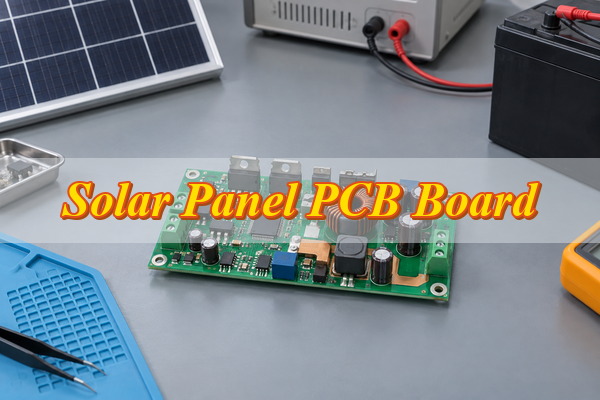
A solar panel PCB board is the printed circuit assembly inside a solar controller, inverter, light, monitor, or battery-powered product. It carries the components and copper connections used to manage power and system functions.
In a charge controller, the board regulates panel input and battery charging. In an inverter, it supports switching, sensing, protection, and communication. In solar lighting, it can manage charging, LED output, timing, and motion sensing.
The photovoltaic panel generates DC power. The PCB receives, converts, measures, or controls that power inside the equipment. State the equipment and board function in the RFQ so the manufacturer can quote the correct construction, components, assembly process, and tests.
What Types of PCB Boards Are Used in Solar Panel Systems?
Solar systems commonly use charge-control, inverter power, lighting-control, and monitoring or communication boards. Larger products may divide these functions across several PCBAs.
| Board Type | Main Function | Typical Equipment Fit |
| Charge-control board | Regulates panel input, battery charging, load control, sensing, and protection | MPPT or PWM controllers, battery chargers, off-grid power units |
| Inverter power board | Converts variable DC power into controlled AC power and manages switching, sensing, and protection | Solar inverter PCB assemblies, microinverters, and power-conversion units |
| Lighting-control board | Charges a battery and controls LEDs, timers, dimming, motion sensing, or dusk-to-dawn operation | Solar streetlights, garden lights, signs, and remote lighting products |
| Monitoring or communication board | Measures voltage, current, temperature, and status while transferring data to a local or remote system | Combiner monitoring, trackers, gateways, remote sensors, and energy-management equipment |
How Do You Choose a Solar Panel PCB Board for Your Application?
Match the board to the equipment specification. Start with maximum panel input, battery system, continuous and peak current, required controls, connector interfaces, cooling, and the mounting envelope.
- Input and battery limits: State normal and maximum panel voltage, battery chemistry, nominal battery voltage, charging method, reverse-polarity behavior, and expected fault conditions.
- Load and conversion task: Define continuous current, peak or inrush current, output type, switching frequency where relevant, duty cycle, and allowed temperature rise.
- Control and communication: List sensing accuracy, protection logic, firmware ownership, programming interface, CAN, RS-485, Ethernet, wireless, or other required connections.
- Mechanical fit: Provide board outline, mounting holes, connector positions, cable direction, height limits, heatsink or chassis contact, and keep-out areas.
- Operating environment: Identify ambient temperature, humidity, condensation, dust, vibration, enclosure sealing, cleaning, and coating requirements.
Use an off-the-shelf module when its electrical limits, interfaces, dimensions, compliance evidence, and lifecycle fit the product. Use custom manufacturing for unique mechanics or functions, controlled parts and tests, owned design data, and repeat orders.
Which PCB Materials Are Suitable for Solar Electronics?
Use standard FR4 when the board’s temperature, electrical stress, current density, insulation, and assembly requirements stay within its limits. It is a practical choice for many charge-control, lighting, and monitoring boards.
Choose high-Tg FR4 when the expected board temperature or assembly profile needs more thermal margin. Confirm the actual laminate grade and Tg in the quotation instead of accepting a generic “high-temperature material” description.
Use metal-core, ceramic, or heavy-copper construction only when the power or heat path requires it. Ask the manufacturer to confirm routing, isolation, soldering, inspection, cost, laminate, copper, layers, holes, and finish before approval.
How Can Solar Panel PCB Boards Handle Heat and Outdoor Exposure?
Provide the expected current, component losses, maximum ambient temperature, and available cooling. The manufacturer can then check copper areas, thermal vias, interface materials, heatsink or chassis contact, and airflow against your operating conditions.
For outdoor use, state the expected condensation, humidity, dust, salt, UV, and temperature cycling. Specify enclosure and connector protection, spacing, drainage, cleaning, and coating, then verify the prototype under the intended load and environment.
How Are Solar Panel PCB Boards Manufactured and Assembled?
Your approved release should follow the order from file review through fabrication, sourcing, SMT/THT assembly, inspection, programming, and testing. Resolving file conflicts first helps you avoid buying components or tooling against the wrong revision.
- Close the file questions: Confirm Gerber or ODB++, drill files, stackup, drawings, netlist, BOM, placement data, polarity, mechanics, quantities, and test requirements.
- Fabricate the approved PCB: Build the specified stackup, holes, copper, solder mask, surface finish, and profile, then complete electrical and dimensional checks.
- Prepare approved parts and firmware: Verify manufacturer part numbers, allowed alternates, moisture handling, firmware, and programming instructions before kitting.
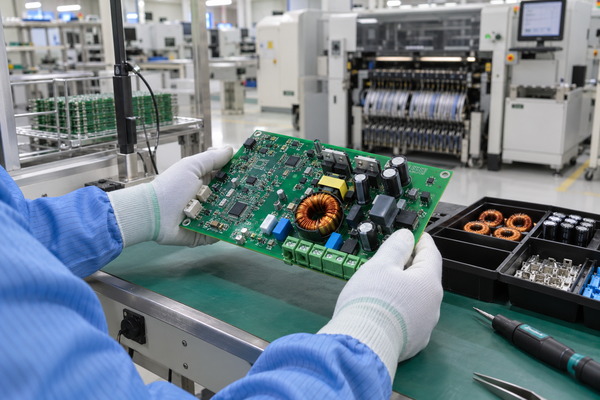
- Assemble and inspect the PCBA: Place and solder SMT and THT parts, then inspect polarity, placement, joints, cleanliness, and mechanical support.
- Receive a revision-linked build record: Keep programming, test results, rework, substitutions, inspection findings, and disposition tied to the board you ordered.
Use the prototype build to confirm the soldering sequence, support for heavy magnetics and connectors, manual operations, and inspection access. Approved findings can then become part of the repeat-production instructions.
What Tests Should a Solar Panel PCB Board Pass?
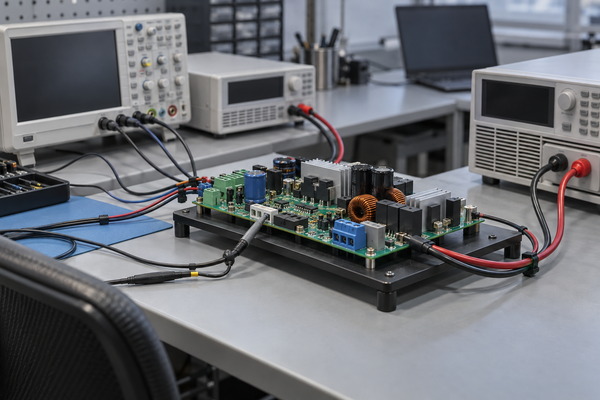
Your test plan should show what each check proves and what result you will receive. Specify bare-board electrical test, assembly inspection, firmware programming, functional checks, fixtures, loads, pass limits, and the required record.
- Charge-control board: Check programmed identity, power-up current, input and output behavior, battery-interface logic, sensing, communications, and agreed protection responses using approved limits.
- Inverter power board: Add insulation-related checks, gate-drive verification, current and voltage sensing, controlled-load operation, temperature observations, and protection tests appropriate to the design.
- Monitoring board: Focus on sensor accuracy, analog stability, interface protection, communication, firmware version, low-power behavior, and data integrity.
- Assembly workmanship: Use visual inspection or AOI for visible joints and placement; apply X-ray only where hidden joints or the risk profile justify it.
Use the board-level results to confirm that the PCBA is ready for product integration. Complete-system validation still needs your actual panel, battery, enclosure, wiring, cooling, firmware, EMC and safety requirements, and intended operating environment.
How Much Does a Custom Solar Panel PCB Board Cost?
Compare quotations only when they cover the same revision, quantity, component responsibility, test coverage, and delivery terms. Otherwise, the lowest price may represent a smaller manufacturing scope.
PCB cost follows size, panel use, layers, laminate, copper, drilling, line and space, finish, tolerances, inspection, and quantity. PCBA adds components, sourcing risk, tooling, placement, SMT/THT work, programming, coating, fixtures, testing, packaging, and specified reports.
Ask for separate one-time, bare-board, component, assembly, programming, testing, packaging, and freight charges. You can then see which costs recur, which items are optional, and which supplier has omitted work you still need.
How Do You Choose a Solar Panel PCB Board Manufacturer?
Choose the manufacturer that gives you the clearest control over cost, revisions, quality, and delivery. Send each supplier the same files and compare the answers and evidence returned with the quotation.
- A quote matched to your files: Look for confirmation of the stackup, copper, spacing, drill, finish, tolerances, panel conditions, and any special processes that affect price or lead time.
- One plan for mixed assembly: Confirm how the supplier will handle SMT, THT, selective or manual soldering, heavy parts, connectors, cleaning, coating, and mechanical support.
- No substitution without your approval: Require manufacturer part numbers, alternate-part rules, and written approval before a material or component change enters the build.
- Test coverage you can verify: Agree on electrical test, inspection, programming, fixture ownership, functional limits, result format, and the boundary between PCBA testing and system validation.
- Records you can retrieve: Put the required lot, panel, or serial-number level in your PCB assembly traceability requirements, together with the material, process, firmware, test, rework, and shipment fields you need.
- A delivery date with clear dependencies: Separate material lead time, fabrication, assembly, testing, approval, shipping, and Incoterm so you know what can change the schedule.
Why Choose EBest Circuit for Solar Panel PCB Board Manufacturing?
Working with EBest Circuit can reduce the handoffs between purchasing, PCB fabrication, assembly, programming, and testing. You send one controlled package and receive one quoted scope for the work EBest will perform.
- Fewer quotation surprises: A combined file review exposes conflicts among fabrication data, assembly files, parts, mechanics, programming, and tests before materials are committed.
- More control over component changes: Purchasing follows your approved part numbers and alternate rules, with proposed substitutions sent back for approval when product performance or fit could change.
- Fewer revision mismatches: PCB construction, BOM, packages, polarity, firmware, and SMT/THT instructions remain tied to the same released build.
- A smoother move beyond the prototype: Approved rework, part changes, firmware, fixture updates, and test limits can be added to the package before pilot or repeat production.
- Clear test responsibility: The quotation can state the included inspections, programming, functional checks, customer inputs, fixtures, limits, and result format.
- Traceability that fits your order: You can define the material, production, firmware, inspection, test, rework, and shipment records you need, plus how they should be retrieved.
You can review the included work, customer-supplied inputs, open decisions, and exclusions before placing the order. This gives your engineering and purchasing teams a common basis for approving cost, schedule, and responsibility.
What Files Are Required for a Custom Solar Panel PCB Board Quote?
You can request a quotation before every detail is final. Send the latest files you have, mark open items clearly, and EBest can return the missing information that affects price, lead time, or manufacturability.
- PCB files: Gerber or ODB++, drill files, stackup or fabrication drawing, board outline, material, copper, thickness, finish, and quantity.
- Assembly files: BOM with manufacturer part numbers, pick-and-place data, assembly drawings, polarity notes, and any customer-supplied parts.
- Programming and test: Firmware and programming instructions, plus the test method, fixture information, operating conditions, limits, and required result format.
- Order details: Prototype or production quantity, mechanical or coating requirements, delivery destination, required date, packaging, labeling, and traceability needs.
FAQs About Solar Panel PCB Boards
Q1: Can one PCB design support both 12 V and 24 V battery products?
A1: Only when the input range, charging method, component ratings, sensing scale, protection thresholds, thermal behavior, and firmware are designed and validated for both systems. Do not treat a voltage-label change as proof of compatibility.
Q2: Can one PCB revision be assembled with several firmware variants?
A2: Yes, if each variant has a controlled firmware identifier, programming instruction, configuration record, label, and test profile. The finished board must remain traceable to the exact software loaded.
Q3: Is a physical sample enough to reproduce an existing solar control board?
A3: A sample can support inspection, but it rarely defines internal copper, materials, tolerances, approved components, firmware, or test limits. Repeat production should use controlled design and manufacturing data.
Q4: Which changes require another prototype build?
A4: Rebuild and revalidate when a change can affect power conversion, protection, thermal behavior, isolation, component fit, firmware interaction, mechanical integration, or test coverage. Documentation-only corrections may not require a new build.
Q5: How should returned boards be prepared for failure analysis?
A5: Record the board identity, operating conditions, symptoms, event history, firmware, photos, and any work already performed. Avoid cleaning, reworking, or powering the board again unless the analysis plan calls for it.
Q6: Can spare boards be included with a production order?
A6: Yes, but define whether they are finished assemblies, unprogrammed units, or bare PCBs and how they will be packaged, labeled, stored, and tested. Spare units should remain tied to the same approved revision.
Conclusion
A clear solar panel PCB board package gives you comparable prices, visible responsibilities, and a smoother production transfer. Define the function, operating conditions, materials, assembly, tests, quantity, and delivery requirements before approving the supplier.
Send your current Gerber or ODB++, stackup, BOM, assembly data, quantity, test needs, and delivery destination to sales@bestpcbs.com. EBest Circuit will return a proposed turnkey scope and the questions needed to complete your quotation.
You may also like
Tags: Solar Charge Controller PCB, Solar Inverter PCB, Solar Panel PCB Board, Solar PCB Assembly, Solar PCB Testing