





Medical monitoring PCB assembly requires precise soldering, controlled components, and reliable electrical performance. EBest Circuit provides medical monitoring PCB assembly services for ECG monitors, SpO2 devices, patient monitors, and wearable medical electronics, supported by ISO 13485:2016 quality management and MES production traceability.
Need to identify a defective component lot or maintain consistent quality from prototype to mass production? EBest Circuit combines precision SMT/THT assembly, free DFM support, and functional testing services to help medical device manufacturers address these challenges.
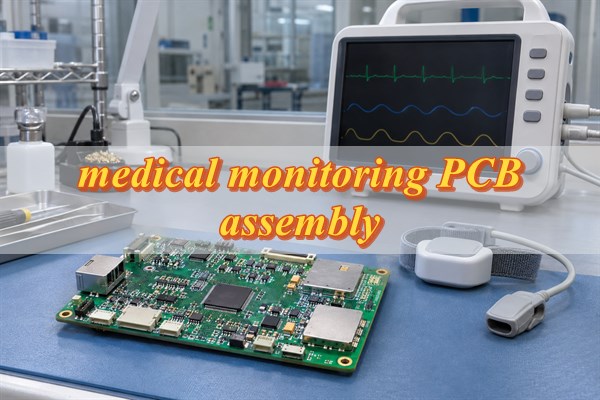
What Types of Medical Monitoring PCB Assemblies Can We Manufacture?
EBest Circuit provides custom PCB manufacturing and assembly for ECG monitors, blood pressure monitors, SpO2 devices, and wearable medical monitoring equipment. Each application requires different approaches to component placement, signal integrity, and assembly verification.
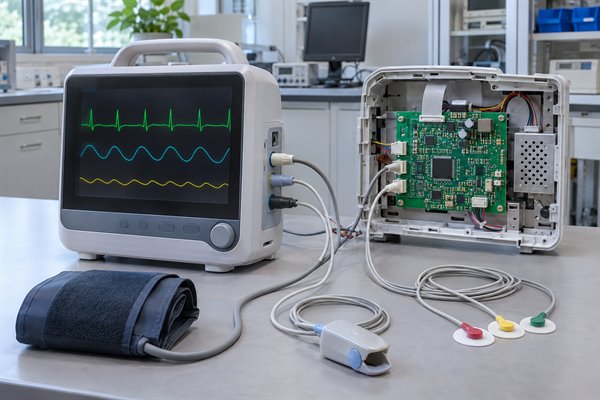
- ECG monitoring PCB assembly: Analog front-end, filtering, processing, and communication circuits where component accuracy, cleanliness, and reliable electrical connections are important for low-level signal acquisition.
- SpO2 monitoring PCBA: LED-driver, photodiode-interface, and signal-processing boards requiring correct component polarity, controlled soldering, and interface verification.
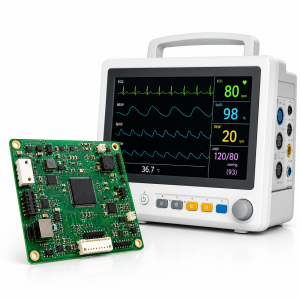
- Multi-parameter patient monitor PCBA: Main control boards, display interfaces, power modules, and sensor-input boards supporting ECG, SpO2, temperature, and non-invasive blood pressure (NIBP) functions.
- Blood pressure monitor PCB assembly: Pressure-sensor interfaces, pump or valve control circuits, power-management circuits, and connector assemblies.
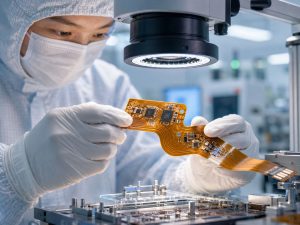
- Wearable medical monitoring PCBA: Compact rigid, flexible, and rigid-flex circuits requiring fine-pitch assembly, controlled board handling, and accurate component positioning.
Why Choose EBest Circuit for Medical Monitoring PCB Assembly?
EBest Circuit combines precision PCB assembly, medical-device quality management, and engineering support to help medical electronics manufacturers reduce assembly risks and maintain consistent production quality. From initial prototypes to repeat orders, we provide the following services and advantages:
- Free DFM and engineering support: We review PCB footprints, solder-pad designs, component spacing, polarity, and test-point accessibility before production, helping identify problems that could cause rework or assembly defects.
- ISO 13485:2016 quality management: Controlled manufacturing documents, inspection procedures, and engineering changes help maintain consistent production requirements across medical monitoring PCBA orders.
- MES production traceability: Five-year manufacturing history retention supports investigation of material batches, manufacturing abnormalities, and quality concerns using recorded production data.
- Precision SMT and THT assembly: Support for 01005 components, 0.25 mm BGA pitch, and mixed-technology assembly accommodates compact and densely populated medical monitoring PCBs.
- One-stop PCB and PCBA manufacturing: We handle PCB fabrication, BOM-based component procurement for PCBA orders, SMT/THT assembly, inspection, and agreed functional testing, reducing the need to manage several manufacturing suppliers.
- Quality inspection and testing: SPI, AOI, X-ray inspection, and customer-defined functional testing help identify soldering defects, placement errors, and electrical faults.
- Prototype and mass production support: Initial samples, pilot builds, and repeat orders can be manufactured using controlled BOM revisions, work instructions, and inspection requirements.
What Medical Monitoring PCB Assembly Services Can EBest Circuit Provide?
EBest Circuit offers PCB fabrication, precision assembly, and testing services for medical monitoring electronics. Whether your project requires a prototype or recurring production orders, the assembly scope can be matched to your PCB construction, component specifications, and quality requirements.
- Prototype PCB assembly: Small-volume assembly for engineering validation, component-fit checks, and initial functional evaluation.
- Full-turnkey PCB assembly: PCB fabrication, procurement against the approved BOM, SMT/THT assembly, inspection, and packaging within one PCBA manufacturing project.
- SMT and BGA assembly: Automated placement and reflow soldering for fine-pitch ICs, QFN, QFP, BGA, and miniature passive components.
- Through-hole and mixed PCB assembly: Installation and soldering of connectors, headers, and other through-hole components alongside surface-mount devices.
- Flexible and rigid-flex PCB assembly: Assembly services for wearable and portable medical monitoring devices requiring specialized PCB support and handling.
- PCB inspection and functional testing: Solder-joint inspection, electrical checks, firmware programming, and testing according to customer-approved procedures.
- Optional box assembly: Integration of assembled PCBs with specified enclosures, connectors, cables, and other mechanical components when required.
For densely populated medical monitoring PCB assemblies, component dimensions and package pitch are important factors in determining assembly feasibility.
| Assembly Parameter | EBest Circuit Capability |
|---|---|
| Minimum SMD component | 01005 |
| Minimum BGA pitch | 0.25 mm |
| Assembly technologies | SMT, THT, mixed assembly |
| Component packages | BGA, QFN, QFP, SMD, through-hole |
| Component presentation | Reel, cut tape, tube, tray, loose parts |
| PCB constructions supported | Rigid, flexible, rigid-flex, multilayer |
| Assembly lead time | 1–5 days for suitable orders |
These capabilities are subject to the actual PCB layout, component specifications, assembly requirements, and engineering review.
How Does ISO 13485 Certification Support Medical Monitoring PCB Assembly Quality?
ISO 13485:2016 provides a quality management framework for controlling manufacturing processes, documentation, and production changes in medical electronics manufacturing. For medical monitoring PCB assembly, these controls help reduce inconsistent production practices and support supplier qualification.
- Manufacturing document control: Approved PCB files, BOMs, placement programs, and assembly instructions help prevent production errors caused by outdated design revisions.
- Incoming material inspection: PCB and component identities, quantities, packaging conditions, and required batch information are verified against approved manufacturing requirements.
- Assembly process control: Documented soldering, inspection, and production procedures help maintain consistent manufacturing conditions between orders.
- Engineering change management: Component substitutions, PCB revisions, and process changes follow the required approval procedures before implementation.
- Nonconforming product control: Defective or suspect PCB assemblies are identified, evaluated, and handled according to established quality procedures.
- Corrective and preventive actions: Recorded quality issues support root-cause investigation, corrective actions, and verification of their effectiveness.
- Quality documentation: Inspection reports, manufacturing records, and relevant quality evidence can support customer audits and investigations within the agreed project scope.
ISO 13485 certification applies to the quality management system within its certified scope rather than individual PCB assemblies. Finished medical-device certification and regulatory approval remain separate from PCBA manufacturing.
How Does EBest Circuit Ensure Medical Monitoring PCB Assembly Traceability?
EBest Circuit uses MES-based production tracking with five-year manufacturing history retention to support medical monitoring PCB assembly traceability. By linking relevant manufacturing records with production batches or individual PCB assemblies, customers can investigate quality problems and identify potentially affected products more efficiently.
- Component and PCB traceability: Record approved component identities, material lots, date codes, and PCB batch information according to project requirements.
- BOM and revision control: Associate production orders with approved PCB designs, BOM revisions, assembly drawings, and applicable firmware versions.
- Manufacturing process records: Track work orders and specified SMT, THT, and inspection activities associated with production batches.
- Inspection and testing records: Retain agreed inspection results, functional-test outcomes, nonconformance information, and rework verification records.
- Shipment traceability: Associate finished PCB assembly identifiers or production lots with shipment documentation for future reference.
For example, if an ECG analog-front-end IC is found to belong to a defective supplier lot, recorded material-to-assembly relationships can help identify which PCB assembly batches contain the affected components. The exact traceability fields, individual board identification requirements, and report formats should be established before manufacturing.
How Is Medical Monitoring PCB Assembly Manufactured?
Medical monitoring PCB assembly follows a defined manufacturing process covering PCB fabrication, incoming inspection, precision SMT/THT assembly, and functional verification. EBest Circuit manufactures PCB assemblies according to approved design files and customer-specified acceptance requirements.
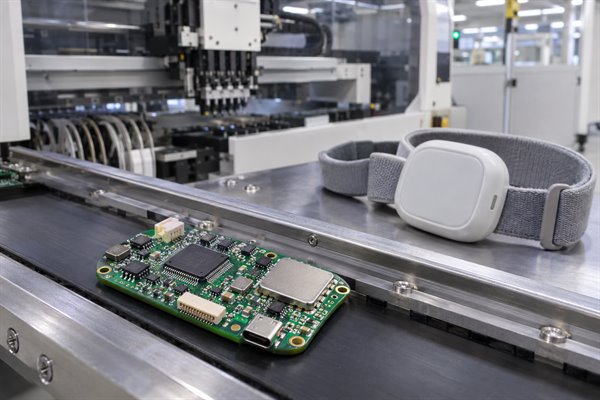
- Engineering and DFM Review: Check Gerber or ODB++ files, PCB stackup, BOM, component footprints, placement coordinates, solder-pad geometry, polarity, and test-point accessibility. Resolve manufacturing questions before production.
- PCB Fabrication: Manufacture the specified rigid, flexible, or rigid-flex PCB. Applicable processes include material preparation, circuit imaging, etching, lamination, drilling, plating, solder-mask application, and surface finishing. Complete bare-board electrical and dimensional inspections.
- Incoming Material Inspection: Inspect bare PCBs and verify component part numbers, package types, quantities, polarity markings, and required batch information against the approved BOM.
- Stencil Preparation and Solder Paste Printing: Prepare the SMT stencil, secure the PCB panel, and print solder paste onto the pads. SPI is used to inspect solder-paste deposition where required.
- SMT Component Placement: Place resistors, capacitors, analog-front-end ICs, microcontrollers, BGA/QFN devices, and other surface-mount components according to the approved placement program.
- Reflow Soldering: Solder SMT components using a controlled reflow temperature profile compatible with the solder alloy, component specifications, and PCB materials.
- Post-Reflow Inspection: Conduct AOI to identify visible placement and soldering defects. Apply X-ray inspection to hidden BGA/QFN solder joints where required.
- Through-Hole Assembly: Install connectors, headers, and other through-hole components using the appropriate manual, selective, or wave-soldering process.
- Cleaning and Protective Processing: Perform the specified cleaning process and apply conformal coating when required, with masking for connectors, contact points, and sensitive areas.
- Firmware Programming and Functional Testing: Program approved firmware when requested. Verify specified power rails, communication interfaces, sensor-input circuits, and other functions according to the customer’s test procedure.
- Final Inspection and Packaging: Confirm assembly acceptance, identification labels, required quality records, and ESD-safe packaging before shipment.
How Are Medical Monitoring PCB Assemblies Inspected and Functionally Tested?
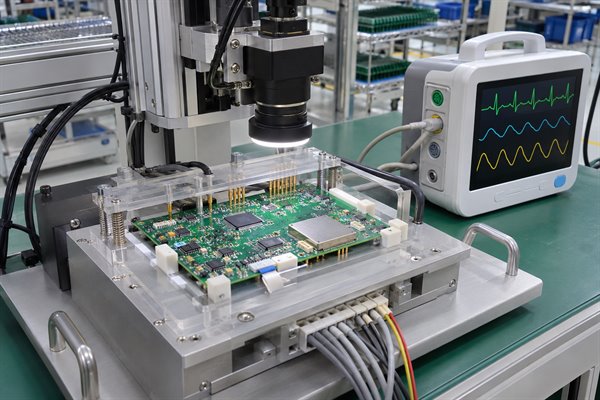
Medical monitoring PCB assemblies require both solder-joint inspection and electrical verification. EBest Circuit uses appropriate inspection methods to identify manufacturing defects and supports customer-defined functional tests to verify the required behavior of ECG, SpO2, and patient-monitoring circuits.
| Inspection or Test | Inspection Focus | Purpose |
|---|---|---|
| SPI | Solder-paste deposition | Detect insufficient, excessive, or misaligned solder paste |
| AOI | Component placement, polarity, visible solder joints | Identify missing components, placement defects, and visible soldering problems |
| X-ray | Hidden BGA/QFN solder joints | Examine concealed solder connections and selected internal solder defects |
| ICT / Electrical Checks | Accessible circuits and electrical connections | Identify shorts, opens, and specified electrical faults |
| Functional Testing (FCT) | Power, signal acquisition, communication, and control functions | Verify board functions against customer-approved test limits |
For ECG PCB assemblies, functional testing may use a known electrical reference signal to verify acquisition-channel response. SpO2 PCB assemblies may require LED-drive, photodiode-interface, and communication checks. Multi-parameter patient-monitor boards may also require power and display-interface verification.
Test fixtures, input signals, measurement limits, and acceptance criteria are established according to the customer’s specifications. Board-level testing does not replace finished medical-device certification.
What Are the Main Challenges in Medical Monitoring PCB Assembly and How Do We Solve Them?
Medical monitoring PCB assemblies often combine sensitive analog circuits, miniature components, and complex digital interfaces. EBest Circuit addresses the associated manufacturing risks through DFM review, controlled soldering, component verification, and application-specific testing.
- Low-level ECG signal errors: Incorrect passive component values, solder residues, and poor electrical connections can affect signal acquisition. We verify critical BOM positions, follow specified soldering and cleaning procedures, and support reference-signal testing to identify assembly-related problems.
- SpO2 sensor-interface faults: Incorrect LED or photodiode polarity and component mismatches may interrupt the signal path. Component verification, polarity inspection, and customer-defined interface tests help identify these defects before shipment.
- Fine-pitch soldering defects: Dense QFN and BGA packages can develop hidden solder bridges or insufficient solder connections. Stencil design review, controlled placement and reflow, and X-ray inspection where required help detect these problems.
- Mixed-signal interference: Sensitive analog channels may be affected by switching power supplies or digital circuitry. DFM review identifies layout and assembly concerns, while electrical and EMC tests determine whether the final design meets its performance requirements.
- Inconsistent production batches: Unapproved component substitutions, obsolete BOM revisions, and manufacturing changes can affect repeat production. Controlled documentation, material verification, and engineering change approval help maintain the approved PCBA configuration.
Medical Monitoring PCB Assembly Case Study: Patient Monitoring Device
EBest Circuit provided medical monitoring PCB assembly services for a patient monitoring device integrating sensor inputs, power management, display connections, and wireless communication. The project required fine-pitch component assembly, functional testing, and traceable manufacturing records.
Project Background
The customer required a medical PCBA integrating sensor input circuits, a microcontroller, power management, display connectors, and a wireless communication module. The assembled boards needed to pass functional verification before the project could proceed to pilot production.
Manufacturing Challenges
The PCB combined sensitive sensor interfaces with densely populated digital and power circuitry. Fine-pitch BGA and QFN packages presented soldering and inspection challenges, particularly because their hidden joints could not be fully examined through visual inspection.
Our Solution
EBest Circuit reviewed the Gerber files, BOM, component polarity, pad dimensions, stencil openings, and test-point accessibility before production.
During SMT assembly, SPI was used to inspect solder-paste deposition, while AOI checked component placement and visible solder defects. X-ray inspection was applied to hidden BGA and QFN solder joints. Functional testing covered power rails, sensor inputs, display connections, and communication interfaces.
Project Results
The prototype passed visual inspection, X-ray inspection, and functional testing. The customer received traceable manufacturing records, and the verified samples supported the transition to pilot production.
What Affects Medical Monitoring PCB Assembly Lead Time?
Medical monitoring PCB assembly lead time depends on PCB fabrication requirements, component availability, assembly complexity, and testing scope. EBest Circuit supports 1–5 days for suitable PCB assembly orders, while complete project delivery schedules depend on the manufacturing and verification requirements.
- PCB fabrication complexity: Multilayer structures, HDI designs, flexible materials, and special PCB processes may require additional manufacturing time.
- Component availability: Long-lead analog-front-end ICs, microcontrollers, and specialized medical electronics components can affect material readiness.
- Assembly requirements: Fine-pitch BGA/QFN packages, double-sided assembly, and mixed SMT/THT processes influence production scheduling.
- Inspection and testing: X-ray inspection, firmware programming, custom functional-test fixtures, and additional verification may extend the schedule.
- Order quantity and approval: Prototype, pilot, and mass production orders require different levels of manufacturing preparation and customer approval.
A confirmed lead time should account separately for PCB fabrication, component readiness, PCBA assembly, functional testing, and transportation to the specified delivery location.
FAQs About Medical Monitoring PCB Assembly
Medical monitoring PCB assembly projects may involve different component configurations, material-handling requirements, and packaging specifications. The following answers address common manufacturing questions.
Q1: Can you assemble customer-supplied bare PCBs?
A1: Yes. Customer-supplied PCBs can be assembled after reviewing their condition, surface finish, panelization, and assembly requirements.
Q2: Can selected component positions be left unpopulated?
A2: Yes. Do-not-populate positions should be clearly identified in the approved BOM and assembly drawings.
Q3: Can you manufacture different BOM variants separately?
A3: Yes. Each variant requires its own approved BOM, placement information, and identification to prevent component mixing.
Q4: How are moisture-sensitive components handled before reflow?
A4: Moisture-sensitive components are handled according to applicable storage, floor-life, and baking requirements.
Q5: Can we provide our own PCB panel design?
A5: Yes. Customer-defined panels can be reviewed for fiducials, tooling margins, support requirements, and depanelization clearance.
Q6: Can we specify solder alloy and cleaning restrictions?
A6: Yes. The required soldering materials and cleaning restrictions should be included in the assembly specification for process compatibility review.
Q7: Can connectors and sensitive contacts be masked during conformal coating?
A7: Yes, when conformal coating is included in the project scope. Masking areas should be clearly identified in the coating drawing.
Q8: Can boards receive individual labels and ESD-safe packaging?
A8: Yes. Individual identification labels and ESD-safe packaging can be arranged according to the approved shipment instructions.
How Can You Request a Medical Monitoring PCB Assembly Quote?
EBest Circuit provides custom medical monitoring PCB assembly services, covering PCB fabrication, precision SMT/THT assembly, quality inspection, and functional testing support. Send your Gerber or ODB++ files, BOM, placement data, assembly drawings, quantity, required component date codes, delivery location, and target delivery date to sales@bestpcbs.com. Include your quality, traceability, and testing requirements to receive a project-specific quotation and free DFM review.
Medical monitoring PCB assembly requires more than reliable solder joints. ISO 13485 quality management, MES production traceability, precision assembly, and defined functional testing help medical device manufacturers control production risks and maintain consistent PCB assembly quality. With EBest Circuit’s one-stop PCB and PCBA manufacturing services, customers can move from prototype validation to repeat production with coordinated engineering, manufacturing, and quality support.
You may also like

Tags: ISO 13485 PCB Assembly, medical monitoring PCB assembly, Medical PCB Assembly Manufacturer, Medical PCBA Manufacturing