A medical PCB manufacturer USA search should focus on project fit, not simply the nearest factory. The right supplier must support your board technology, prototype schedule, production volume, documentation, quality plan, sourcing controls and batch traceability—whether you need a quick-turn bare board or repeat PCBA production.
This guide compares 10 manufacturers serving US medical-electronics projects and shows how to shortlist them by capability and sourcing model. You will also see when US-based production is necessary, when a qualified overseas partner may offer more flexibility, and which responsibilities remain with the medical-device manufacturer.
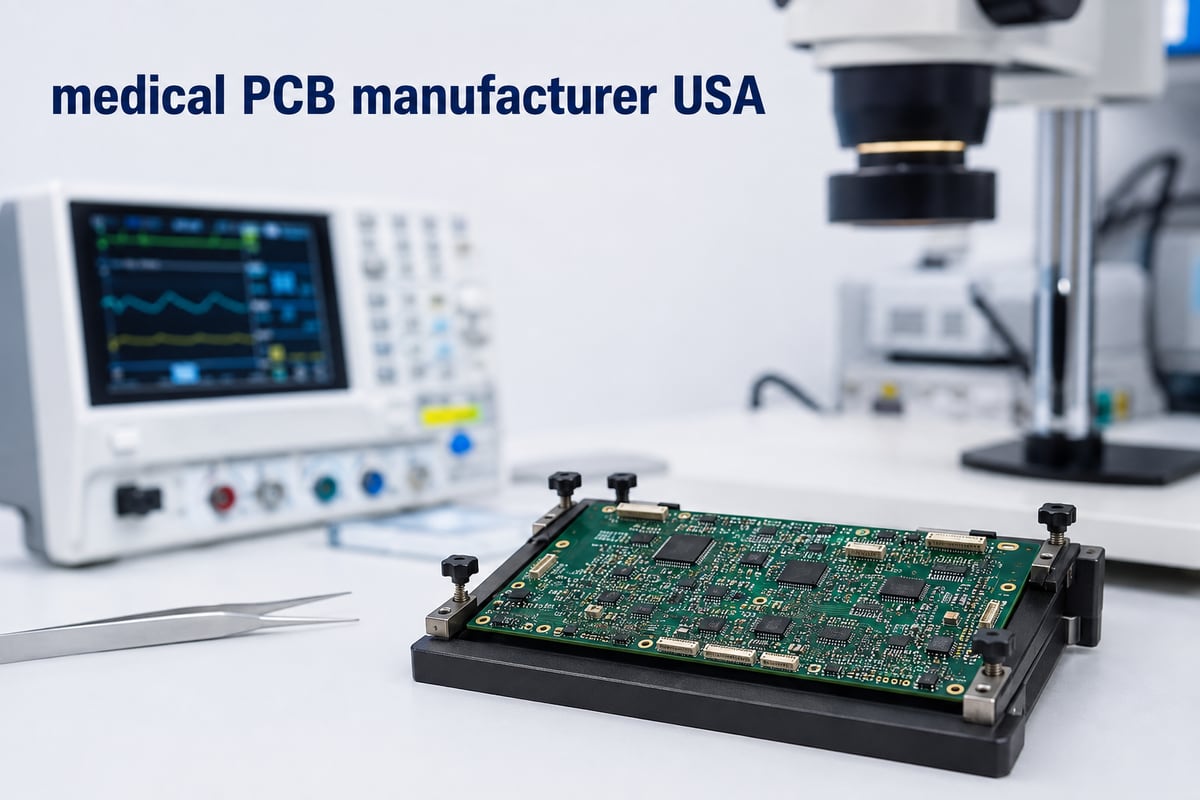
Top 10 Medical PCB Manufacturers in the USA
The following companies have visible medical PCB, PCB assembly or medical-electronics manufacturing capabilities. The order is not a universal quality ranking. Your best choice depends on technology, volume, location, documentation and the exact scope stated in your RFQ.
| Manufacturer | Best fit |
|---|---|
| AdvancedPCB | Domestic quick-turn prototypes, HDI, flex and rigid-flex |
| HT Global Circuits | Complex medical PCB fabrication across multiple board types |
| EMSG | US small- and medium-volume medical PCB assembly |
| A2Z Electronics | Domestic high-mix, low-to-mid-volume assembly |
| San Francisco Circuits | Fast-turn fabrication and assembly for advanced boards |
| Sierra Circuits | US-built HDI, flex and microelectronics prototypes |
| Cirexx International | Domestic flex and rigid-flex production under one roof |
| Microboard | Medical PCBA, system integration, testing and traceability |
| TTM Technologies | Advanced, high-reliability programs scaling across regions |
| Sanmina | Large medical programs requiring global manufacturing and system integration |
Before adding any company to an approved supplier list, request the current certificate, manufacturing-site scope and exclusions. A company-wide certification statement does not automatically mean that every facility, process or product type is covered.
Which Medical PCB Manufacturing Capabilities Matter Most for USA Projects?
For USA medical PCB projects, capability should be checked against the actual released design—not a generic equipment list. At EBest Circuit, we review the PCB structure, smallest features, materials, component packages, and inspection requirements before confirming whether a project fits our manufacturing process.
Our relevant PCB and PCBA capabilities include:
| Capability | EBest Circuit capability |
|---|---|
| Multilayer PCB | Standard 1–10 layers; special builds up to 32 layers |
| Fine line / spacing | Down to 3/3 mil for applicable structures |
| Finished hole size | Down to 0.15 mm |
| Laser blind via | Down to 0.10 mm |
| Through-hole aspect ratio | Up to 10:1 for applicable builds |
| FPC | Standard 1–6 layers; special builds up to 8 layers |
| Rigid-flex PCB | Standard 2–10 layers; special builds up to 12 layers |
| Controlled impedance | ±10% for applicable structures |
| PCB materials | High-Tg FR4, high-frequency laminates, metal-core and ceramic options |
| Fine-pitch SMT | Placement accuracy down to ±0.025 mm on applicable equipment |
| Solder paste inspection | 3D SPI with 10 μm inspection accuracy |
| Assembly inspection | 3D AOI and X-ray for BGA, CSP and other hidden-joint packages |
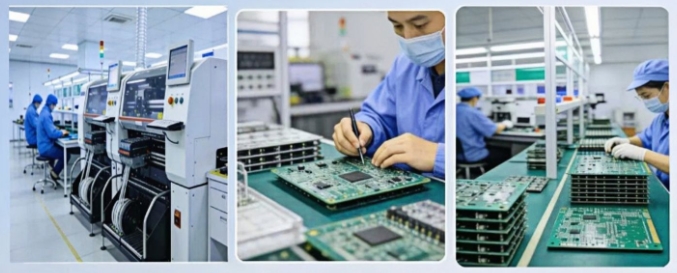
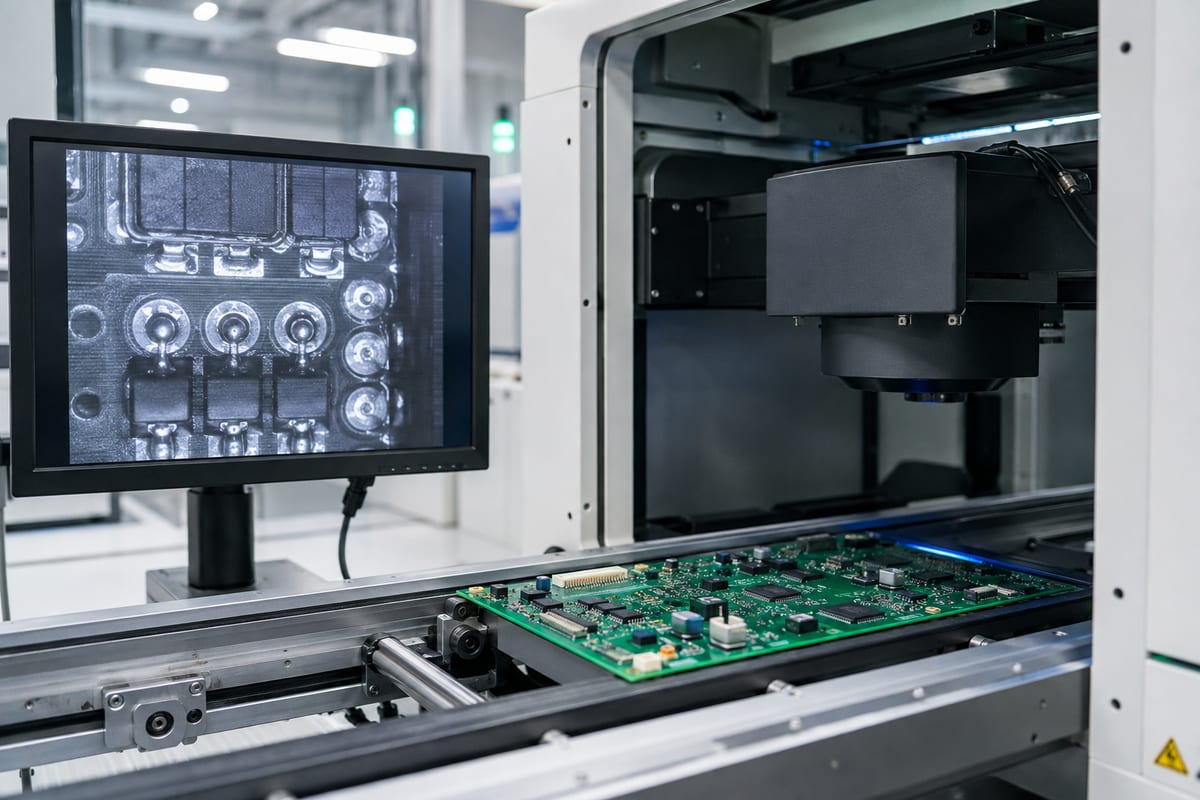
Our SMT inspection process includes 3D SPI for solder-paste volume, area and thickness, while X-ray is available for hidden solder joints under BGA, CSP and similar packages.
When we review a medical PCB RFQ, we normally compare these capabilities directly with the customer’s released files, including:
- Layer count, finished thickness and stackup.
- Minimum trace, spacing, hole and via structure.
- Specified material and controlled-impedance requirements.
- Smallest component packages and pitch.
- Required SPI, AOI, X-ray or other inspection steps.
- Prototype requirements and expected repeat-production volume.
This allows us to identify process limits or manufacturing questions before production rather than after the first build. For medical PCB buyers, the useful question is therefore not simply whether EBest Circuit can manufacture “medical PCBs,” but whether our proven process capability matches the specific PCB and PCBA being released.
How Should Medical PCB Manufacturers Control Quality for USA Projects?
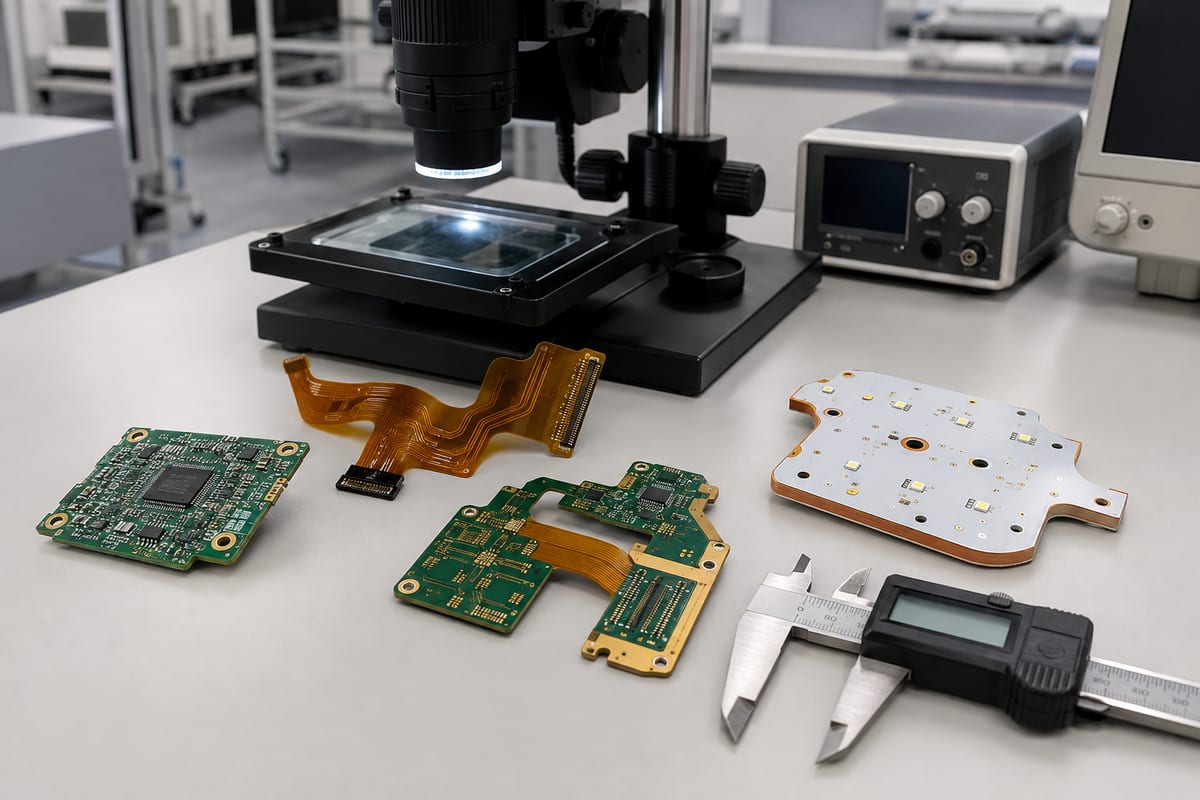
Quality control for USA medical PCB projects should cover the entire production flow, not only final inspection. The manufacturer should control the released revision, incoming materials, fabrication and assembly processes, inspection records, nonconforming products, and any production changes under a documented quality system.
For medical PCB and PCBA production, the main controls should include:
- Revision control: Verify Gerber files, BOM, CPL, drawings, test requirements, and engineering changes before production starts.
- Incoming material control: Check PCB laminates, components, solder paste, surface-finish requirements, and supplier documentation against the released specification.
- Lot traceability: Maintain traceability for PCB materials, components, production batches, operators, and inspection records where required.
- Process control: Use documented manufacturing instructions and controlled process parameters for PCB fabrication, SMT, soldering, cleaning, and other critical operations.
- In-process inspection: Apply appropriate inspection such as SPI, AOI, X-ray, visual inspection, and dimensional or electrical checks according to the product requirements.
- Final testing and acceptance: Define the IPC class, electrical test, functional test, workmanship criteria, and customer-specific acceptance limits before shipment.
- Nonconformance control: Segregate rejected material, document the issue, and use approved disposition or corrective-action procedures before release.
- Change control: Do not change materials, components, processes, stackups, or approved suppliers without following the agreed change-notification and approval process.
- Production records: Keep inspection, test, traceability, and revision records linked to the correct order and manufacturing lot.
For USA medical-device projects, these controls should operate within a documented quality system appropriate to the manufacturer’s role. FDA’s Quality Management System Regulation became effective on February 2, 2026 and incorporates ISO 13485:2016 by reference, but the PCB supplier is not automatically the legal manufacturer of the finished medical device.
The practical rule is simple: do not rely on the phrase “medical grade.” Define the applicable IPC class, inspection methods, test requirements, traceability level, change-control rules, required records, and retention period in the RFQ and released manufacturing package.
Which Medical PCB Projects Require USA-Based Manufacturing?
Domestic production is necessary when the project contract, customer policy, funding condition or applicable security requirement explicitly requires it. It may also be the practical choice when engineers need frequent face-to-face reviews, same-time-zone support or very short physical logistics during development.
USA-based manufacturing should receive priority when:
- The contract mandates domestic fabrication or assembly.
- Export-control, security or data-handling rules restrict offshore access.
- A government-funded program includes country-of-origin requirements.
- The approved supplier list is limited to audited domestic facilities.
- Prototype iterations require immediate local engineering access.
- Shipping time and cross-border logistics would outweigh the production benefit of an overseas source.
“Sold by a US company” and “manufactured in the USA” are not the same. Ask candidates to identify the exact fabrication and assembly sites, including any outsourced processes. Confirm the answer against your contract and regulatory responsibilities rather than relying on a logo or mailing address.
When Is an Overseas Medical PCB Manufacturer a Better Fit?
An overseas medical PCB manufacturer can be considered when domestic production is not mandatory and the project needs a broader balance of engineering support, component sourcing, prototype quantities and production cost. The decision should be based on controlled execution—not price alone.
An overseas partner may fit better when:
- The project needs PCB fabrication, component purchasing and PCBA from one accountable team.
- Several board technologies or sourcing channels must be coordinated.
- Prototype or pilot quantities are too small for a preferred domestic supplier.
- The BOM needs availability review and customer-approved alternatives.
- The project has enough schedule allowance for international shipping.
- The supplier can meet the required quality-system, traceability and documentation scope.
Before placing the order, compare the complete landed result: tooling, components, assembly, testing, reports, packaging, freight, duties and schedule. Agree on response hours, engineering contacts, revision approval and escalation routes. This turns distance into a manageable project variable rather than an uncontrolled risk.
Case Study: Medical PCB Production for a US Customer
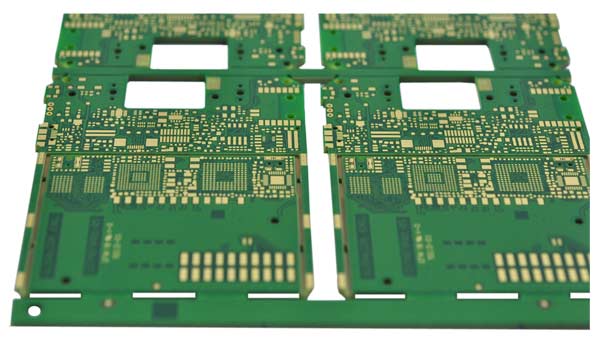
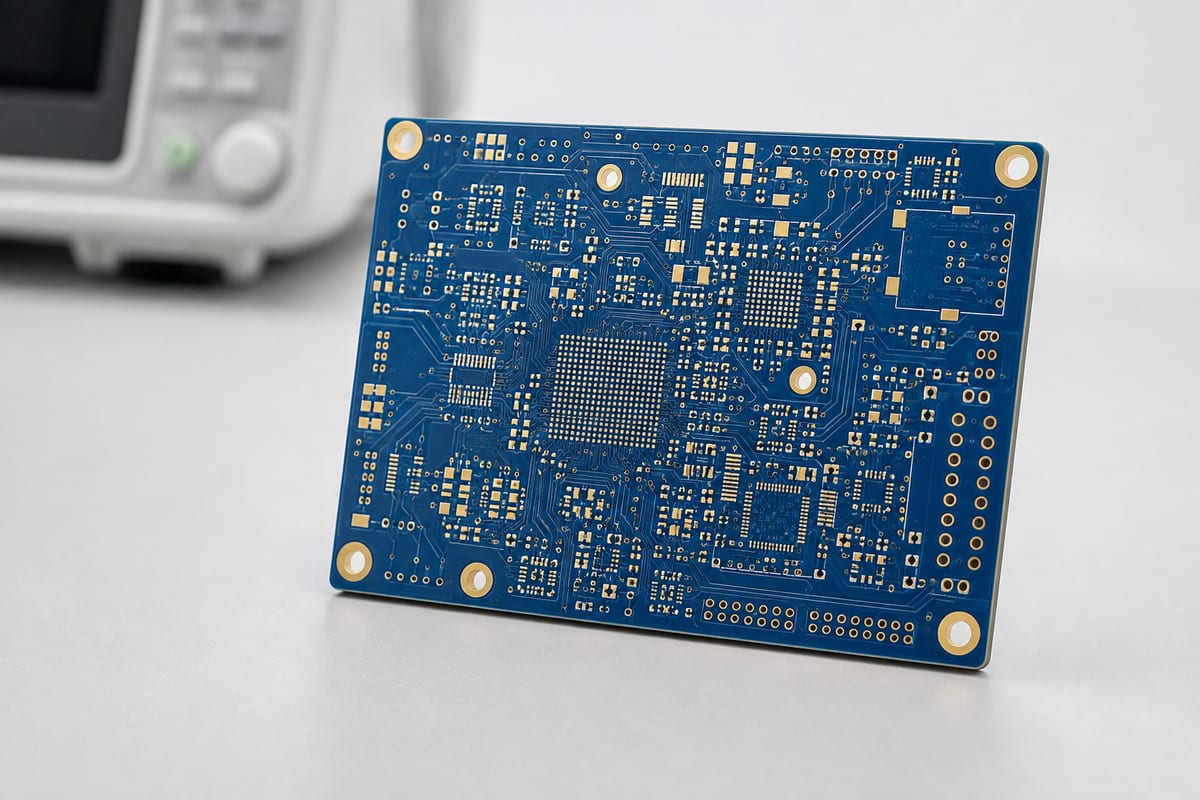
A US medical-electronics customer needed a compact board capable of supporting dense control, signal-acquisition and high-speed data-processing circuits. EBest manufactured a six-layer, second-order HDI FR4 PCB with the following construction:
- FR4 Tg170 CAF-resistant, halogen-free material.
- 1 oz copper and controlled impedance.
- 1.0 mm finished thickness with ±10% tolerance.
- ENIG with 1 μin gold.
- Blind and buried vias.
- Resin-plugged vias with copper plating and planarization.
- Blue solder mask and white silkscreen.
The HDI structure provides routing density for compact medical electronics, while the Tg170 CAF-resistant material supports insulation reliability under demanding operating conditions. Controlled impedance supports stable high-speed signal transmission, and the thin 1.0 mm construction helps the PCB fit into space-constrained equipment.
This combination is suitable for high-density main-control, signal-acquisition and data-processing boards used in portable ultrasound equipment, patient monitors, ECG equipment, medical endoscope control systems and point-of-care testing devices.
Customer result: a complex medical HDI PCB moved from confirmed manufacturing data to completed production and shipment in 1.5 weeks, giving the customer’s engineering team a physical board for the next stage of equipment integration and validation.
Why Is EBest an Ideal Medical PCB Manufacturer for USA Customers?
EBest Circuit (Best Technology) is a China-based PCB and PCBA manufacturer serving international customers; it does not claim to be a US factory. It is a practical option for USA medical-electronics teams that are permitted to source overseas and want engineering review, PCB fabrication, component sourcing and assembly coordinated through one supplier.
Faster engineering decisions: one sales contact connects you directly with three PCB, sourcing and assembly engineers.
Fewer production surprises: DFM review and a BOM optimization list expose issues before the build.
One simpler handoff: PCB fabrication, component sourcing and PCBA are coordinated through EBest’s own factories.
Traceable orders: material, batch and production information can be retrieved in as little as five seconds.
Earlier equipment validation: standard PCBA orders can be completed in approximately 1.5 weeks when files and components are ready.
EBest operates under ISO 9001, ISO 13485, IATF 16949 and AS9100D quality systems.
Send your Gerber files, BOM, CPL, assembly drawings, quantities and inspection or test requirements to sales@bestpcbs.com. You will receive a project-specific review covering manufacturability, sourcing scope and delivery timing.
FAQs About Medical PCB Manufacturers in the USA
Does a medical PCB have to be manufactured in the USA?
Not automatically. Domestic production is required when a contract, customer policy, security condition, funding rule or approved-supplier restriction specifies it. The medical-device manufacturer should determine the applicable sourcing requirements for the finished product.
Is ISO 13485 enough to approve a medical PCB manufacturer?
No. Confirm that the certificate is current and covers the relevant site and service. You must also evaluate technical capability, process controls, traceability, inspection, testing, change management and the supplier’s ability to meet your approved specifications.
What files are needed for a medical PCB quotation?
Provide revision-aligned Gerber or approved manufacturing data, drill and route files, a fabrication drawing, stack-up, BOM, CPL, assembly drawing, quantities, material requirements and the required inspection, testing, documentation and delivery scope.
Can an overseas supplier support US medical-electronics projects?
Yes, when overseas sourcing is permitted and the supplier satisfies the project’s technical, quality, documentation and traceability requirements. Confirm the actual production site, communication process, shipping plan and customer-approval boundaries before ordering.
How should manufacturers be compared beyond unit price?
Compare the total quoted scope, DFM response, tooling, component sourcing, testing, reports, lead-time assumptions, change controls, freight and landed schedule. A lower unit price is not a saving if essential work is excluded.
Choosing among medical PCB manufacturers in the USA starts with one decision-ready RFQ and a clear sourcing requirement. If your project permits overseas manufacturing, EBest can review your PCB and PCBA package, identify manufacturing or BOM questions and provide a quotation based on the required production and documentation scope. Contact sales@bestpcbs.com to discuss your next medical PCB project.