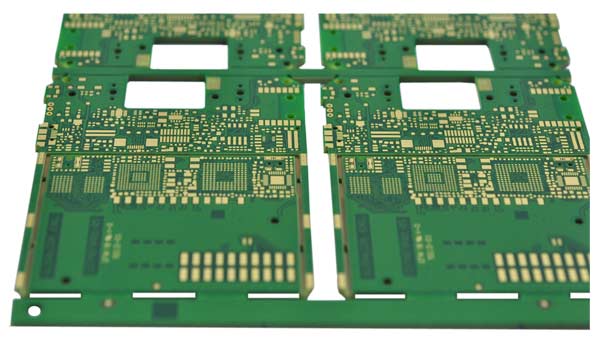
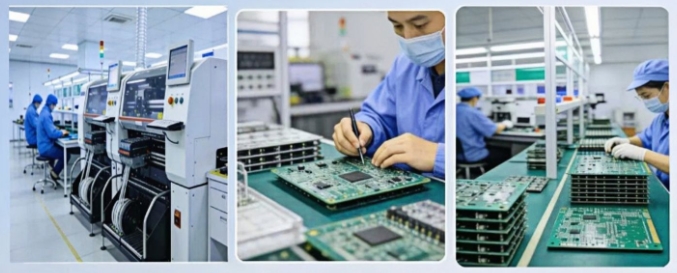
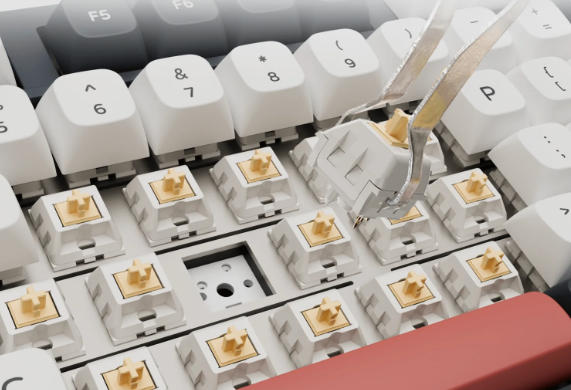
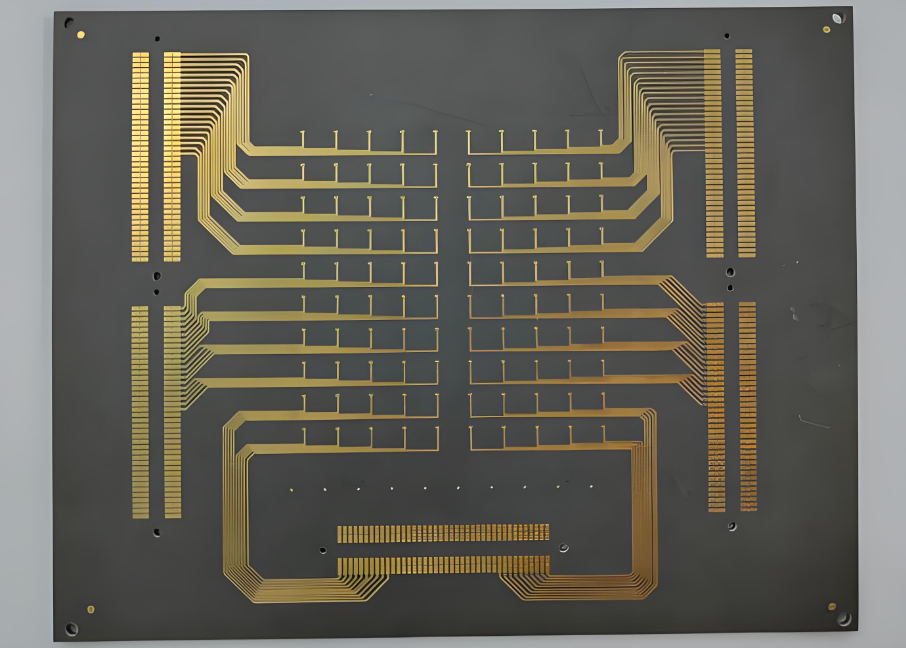
IC substrate is a core material in semiconductor packaging because it connects the chip to the circuit board, supports electrical transmission, and helps manage heat inside compact electronic products.
This article explains what an IC substrate is, how it is classified, which materials are commonly used, how it compares with PCB, and why it matters in modern electronics.
What Is an IC Substrate?
An IC substrate, also known as an integrated circuit packaging substrate, is the base material used in semiconductor packaging. It sits between the silicon die and the printed circuit board, serving as the interconnection platform that carries signals, provides mechanical support, and improves thermal performance.
It is not just a simple carrier. In modern chip packaging, the substrate directly affects package size, routing density, signal integrity, and long-term reliability. As electronic devices become smaller and more powerful, the role of the IC substrate becomes increasingly important.
IC substrates are widely used in advanced semiconductor packaging because they support high density, fine circuitry, thin structures, and multi-pin interconnection. In many cases, they also contribute to better heat dissipation and enable more compact package designs.
Why Is IC Substrate Important in Semiconductor Packaging?
The IC substrate is an essential part of the chip packaging and testing process. Its main job is to support the chip physically while creating an electrical path between the chip and the system board.
Beyond that, it also helps improve package performance in several ways. It can reduce the size of the final package, improve electrical transmission, support higher pin counts, and help spread or dissipate heat. These functions are especially valuable in high-performance applications where package density and thermal control are critical.
As technologies such as AI, 5G, cloud computing, and big data continue to grow, the demand for high-end chips is rising quickly. That trend is pushing substrate technology toward finer lines, higher reliability, and better thermal stability.
How Are IC Substrates Classified?
IC substrates can be classified by packaging type, material characteristics, and bonding technology. Each classification helps engineers choose the right solution for different package structures and performance requirements.
What Are the Main Packaging Types of IC Substrate?
BGA IC Substrate
Ball Grid Array substrates are known for strong electrical and thermal performance. They are commonly used in packages with high pin counts and are suitable for applications that need stable interconnection and efficient heat flow.
CSP IC Substrate
Chip Scale Package substrates are designed for compact, lightweight packaging. They are often used in telecommunications and storage products where the package size must remain very small.
FC IC Substrate
Flip-chip substrates support low circuit loss, low signal interference, and efficient heat dissipation. They are widely used in high-performance devices that require faster signal transmission and finer routing.
MCM IC Substrate
Multi-Chip Module substrates allow several chips with different functions to be placed inside one package. This structure helps reduce size and shorten interconnections, although thermal control and signal interference become more challenging as complexity increases.
What Material Types Are Used in IC Substrate?
Rigid IC Substrate
Rigid substrates are commonly made from ABF resin, BT resin, or epoxy resin. These materials offer dimensional stability and are widely used in mainstream semiconductor packaging.
Flexible IC Substrate
Flexible substrates are mainly made from PI or PE resin. They are suitable for applications that need lighter weight, thinner structures, or a certain level of flexibility.
Ceramic IC Substrate
Ceramic substrates may use alumina, aluminum nitride, or silicon carbide. They offer lower thermal expansion and good thermal performance, which makes them suitable for more demanding operating environments.
What Bonding Technologies Are Used for IC Substrate?
The common bonding technologies used in IC substrate packaging include:
- Tape-Automated Bonding (TAB)
- Wire Bonding
- Flip-Chip Bonding
Each bonding method serves different package designs and cost targets. Wire bonding is still widely used in many standard packages, while flip-chip bonding is more suitable for high-speed, high-density applications.
What Materials Are Usually Used to Make IC Substrates?
The main raw materials used for IC substrates today include BT substrates, ABF substrates, and glass substrates. These material systems differ in dielectric behavior, thermal stability, process capability, and application range.
What Is a BT Substrate?
BT substrate uses bismaleimide triazine resin as its base material. It is valued for its high glass transition temperature, good heat resistance, and relatively low dielectric constant. These features make it suitable for chips that require dependable electrical and thermal reliability.
BT substrates are commonly used in memory chips, MEMS chips, RF chips, and LED chips. As server demand and data center construction continue to grow, BT substrates remain important in packaging applications connected to storage and memory products.
What Is an ABF Substrate?
ABF stands for Ajinomoto Build-Up Film. ABF substrate is designed for finer circuitry, smaller line widths, and higher routing density. Because of this, it is highly suitable for packages with high pin counts and high transmission speeds.
ABF substrates are widely used in CPU, GPU, FPGA, and ASIC packaging, especially in high-performance computing. They are a major choice for flip-chip packaging in applications linked to AI, 5G, cloud computing, and data-intensive systems.
As package requirements become more demanding, ABF materials must offer stronger thermal stability, lower dielectric behavior, and better dimensional control. These improvements are necessary to support larger substrate sizes and more advanced processing requirements.
What Is a Glass Substrate?
Glass substrate is a newer IC substrate material that has attracted strong industry interest. It offers excellent mechanical stability and favorable physical properties for advanced packaging.
Compared with traditional substrate materials, glass can reduce pattern distortion, improve photolithography depth of focus, and support much higher via density. It is also considered promising for ultra-large package formats because its mechanical characteristics can improve yield and dimensional consistency.
As next-generation semiconductor packaging continues to evolve, glass substrate is expected to play a larger role in applications that require very high density and strong dimensional stability.
What Is the Difference Between IC Substrate and PCB?
IC substrate and PCB are closely related, but they serve different functions and are built with different design rules and process targets.
Basic Definition
An IC substrate is mainly used in semiconductor packaging. It forms the connection between the bare chip and the system board, while supporting fine-pitch routing and package integration.
A PCB, or printed circuit board, is used at the system level. It connects packaged electronic components, connectors, and other circuits in finished products such as computers, communication equipment, medical devices, and industrial electronics.
Design Features
IC substrate design focuses on extremely fine lines, tight spacing, precision routing, heat control, and signal integrity. The design space is small, but the electrical demands are very high.
PCB design usually covers broader system-level concerns such as material selection, stackup planning, process cost, EMC performance, and overall manufacturability. While precision still matters, the design rules are generally not as fine as those used in IC substrate production.
Manufacturing Process
IC substrate manufacturing uses advanced processes such as deposition, exposure, etching, molding, and precise laser processing. The production standard is closer to semiconductor packaging than to standard board fabrication.
PCB manufacturing includes processes such as imaging, drilling, plating, etching, solder mask application, testing, and final inspection. Although there are similarities in circuit formation, IC substrate manufacturing requires much tighter tolerance control and finer circuit capability.
Working Relationship
The IC substrate and PCB work together in a complete electronic system. The IC substrate connects the semiconductor die to the package level, while the PCB connects that package to the rest of the product.
What Are the Main Applications of IC Substrate?
IC substrates are used in a wide range of electronic products because they support miniaturization, dense interconnection, and stable performance.
- Consumer electronics such as smartphones, tablets, laptops, and wearables
- Automotive electronics including ADAS, infotainment systems, and electric vehicles
- Telecommunications such as 5G infrastructure and networking equipment
- Medical devices including implantable products and diagnostic equipment
- Aerospace and defense systems such as radar, satellite electronics, and surveillance devices
- Industrial applications including robotics and automation systems
- AI and sensor modules that require advanced packaging performance
What Is IC Substrate Packaging?
IC substrate packaging is typically the final stage of semiconductor device production. At this stage, the semiconductor die is enclosed within a protective package that shields it from mechanical damage and environmental exposure while enabling electrical connection to the circuit board.
The package does more than protect the chip. It also helps manage electrical transmission, package size, interconnection density, and heat flow. The selection of package style depends on performance requirements, mounting method, and product size targets.
What Are the Common Types of IC Substrate Packages?
- PGA (Pin Grid Array) – Often used for socketed components and packages with pin-based connection structures.
- DIP (Dual Inline Package) – A traditional through-hole package with leads extending into the PCB.
- CSP (Chip Scale Package) – A very compact surface-mount package designed to stay close to die size.
- QFP (Quad Flat Package) – A leaded surface-mount package with leads on all four sides.
- QFN (Quad Flat No-Lead) – A compact leadless package widely used for surface-mount assembly.
- MCP (Multi-Chip Package) – A package that integrates multiple semiconductor dies and sometimes other components into one structure.
- Area Array Package – A package style that uses the surface area efficiently for dense interconnection and improved performance.
What Are the Main Features of IC Substrate?
- High interconnection density for routing many chip-to-board connections in a small space
- Good signal integrity supported by low-loss materials and precise circuit patterns
- Thermal management capability that helps transfer and spread heat from the chip
- Mechanical support and protection for delicate semiconductor dies
- Miniaturization support through thin structures, fine lines, and compact package design
- Multi-layer routing capability for more complex electrical connections
- Reliability in demanding environments through stable materials and controlled packaging structures
Why Is the IC Substrate Market Growing?
The IC substrate market is expanding because advanced chips continue to demand better packaging materials and more precise interconnection platforms. AI processors, high-speed networking devices, automotive electronics, and 5G infrastructure all require packaging solutions with finer routing, stronger thermal performance, and higher reliability.
BT substrate continues to serve important roles in memory, RF, and LED packaging. ABF substrate remains a major material in high-performance computing packages. Glass substrate is also gaining attention as a future option for ultra-large and highly advanced package structures.
As semiconductor packaging becomes more sophisticated, IC substrate technology will continue moving toward higher density, thinner profiles, lower signal loss, and better dimensional stability.
Conclusion
IC substrate is a critical part of semiconductor packaging because it links the chip to the circuit board while supporting signal transmission, thermal management, and mechanical reliability. It plays a direct role in package size, electrical performance, and overall product stability.
From BT and ABF to glass substrate, material development is shaping the next stage of advanced packaging. At the same time, rising demand from AI, 5G, cloud computing, automotive electronics, and industrial systems is driving the need for more capable substrate solutions.
Understanding IC substrate types, materials, package forms, and differences from PCB helps engineers, purchasers, and product developers make better decisions when selecting the right packaging platform for modern electronics.